
Plenary Speakers
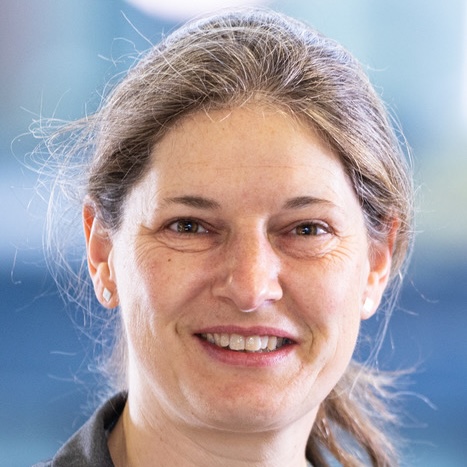
Prof. Barbara Hammer
Date: 08:30-09:15, 19 May 2026
Title: Challenges and perspectives of machine learning models as efficient surrogates in water distribution systems
Abstract:
The increasing availability of smart sensors in water distribution systems (WDS) enables modelling and control to be enhanced by data-driven technologies. Due to their flexibility, modern deep learning methods are particularly promising in this area. Applications of deep learning in WDS range from methods for localising leakages, estimating states as concerns water quality, to optimising pump schedules and supporting the planning of WDS infrastructure. In this talk, I will explore the opportunities and challenges of using deep models for surrogate modelling in WDS. I will discuss how challenges such as hydraulic simulation and state estimation can be modelled as machine learning tasks and tackled by deep learning architectures, particularly graph neural networks. Here, incorporating physical domain knowledge is crucial for valid generalisation in the realm of limited data, leading to novel hybrid models that combine expert domain knowledge and data-driven modelling. Secondly, I will discuss the requirements imposed on machine learning technologies in high-stakes domains such as WDS due to the AI Act of the European Union. Three main requirements are explainability, fairness and robustness of the methods. I will discuss how these requirements can be translated into mathematical objectives and tested for specific models, and I will take a look at technologies that address these requirements.
Short Bio:
Barbara Hammer is a full Professor for Machine Learning at the CITEC Research Center at Bielefeld University, Germany. She received her Ph.D. in Computer Science in 1999 and her venia legendi (permission to teach) in 2003, both from the University of Osnabrueck, Germany, where she was head of an independent research group on the topic ‘Learning with Neural Methods on Structured Data’. In 2004, she accepted an offer for a professorship at Clausthal University of Technology, Germany, before moving to Bielefeld in 2010. Barbara’s research interests cover theory and algorithms in machine learning and neural networks and their application for technical systems and the life sciences, including explainability, learning with drift, nonlinear dimensionality reduction, recursive models, and learning with non-standard data. Barbara has been chairing the IEEE CIS Technical Committee on Data Mining and Big Data Analytics, the IEEE CIS Technical Committee on Neural Networks, and the IEEE CIS Distinguished Lecturer Committee. She has been elected as member of the IEEE CIS Administrative Committee and the INNS Board. She has been an associate editor of the IEEE Computational Intelligence Magazine, the IEEE TNNLS, and IEEE TPAMI. Currently, she is involved in a number of large-scale projects including the DFG collaborative research center on Constructing Explainability, the EU Doctoral Network on Learning with Multiple Representations (LEMUR), the ERC Synergy Grant Smart Water Futures, and the AI Academy OWL funded by BMFTR. Barbara has been selected as member of Academia Europaea.
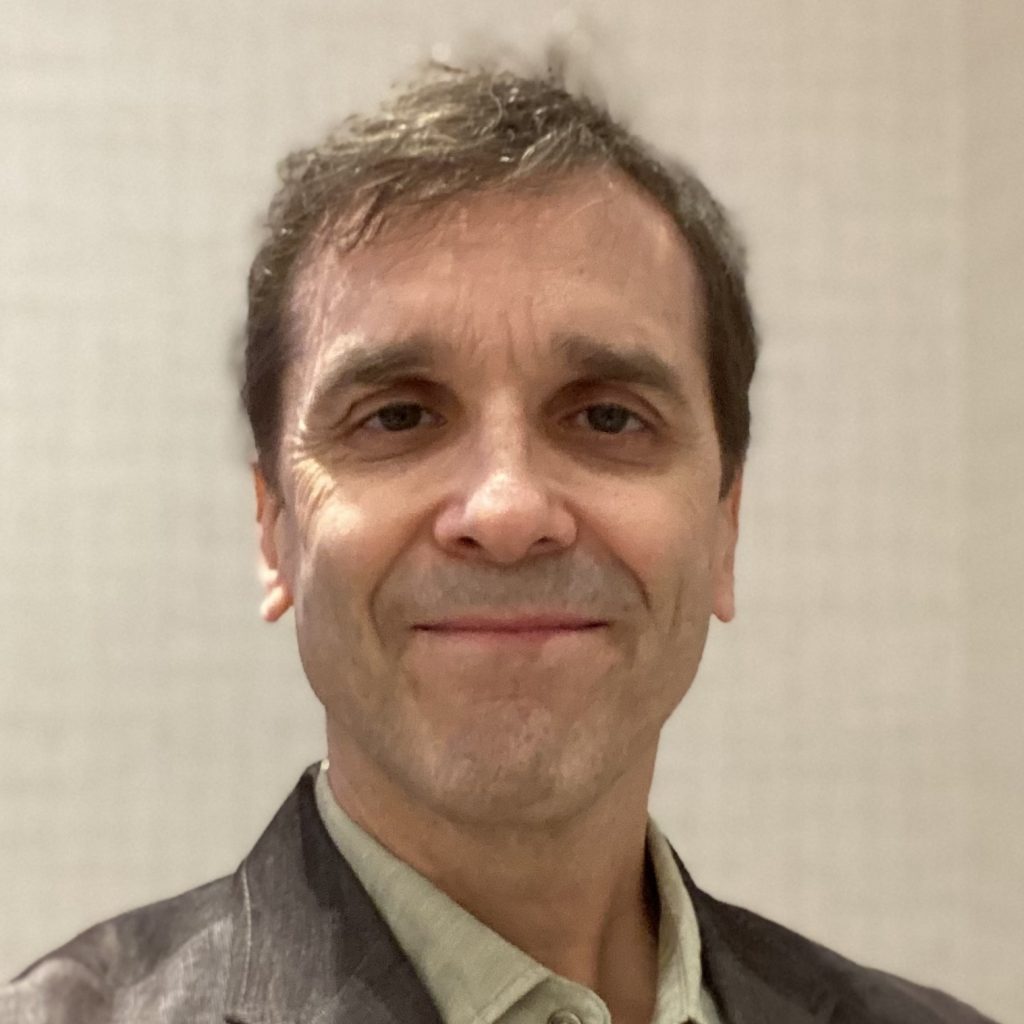
Prof. Jim Uber
Date: 09:15-10:00, 19 May 2026
Title: Is a Water Network Digital Twin Worth the Hassle?
Abstract:
It can be, depending on how well it helps water utilities solve important problems. The talk will describe some high-value use cases for digital twins, and the requirements those place on backend computational capabilities. Based on trying over the course of many years, I will describe how to implement a digital twin that will be difficult to scale and costly to maintain, while failing to solve important problems. Then – admittedly based on much less experience – I will describe how my colleagues and I have finally found a technological path out of this darkness. That path has been known to some for decades, but often in application areas outside of water systems with few bridges to our community. Doing the work to bring that knowledge into our research and application domain is a worthy endeavour for all of us.
Short Bio:
Jim was born in 1960 to Eugene and Lois Uber – Gene a travelling salesman and Lois a registered nurse. He grew up south of Chicago in Park Forest, Illinois, and attended Rich South high school. He was on the wrestling team all four years and made it to the state sectional tournament his senior year in the 119 lb weight class, losing soundly to Tom Gerdes who then went on to take 4th place in the state championship. Early on he liked to take things apart and tinker in the garage, and his parents let him use power tools. He attended Bradley University and graduated in Civil Engineering, a major he picked because he liked to build things, and Civil Engineers built things that he could see. His interests turned toward environmental engineering, and he attended graduate school and received a PhD in Environmental Systems Analysis in 1988, working with E. Downey Brill, Jr. Downey was a wise friend and once described Jim as being “resistant to pressure.” In 1990 he joined the environmental engineering faculty at the University of Cincinnati. Early on he had the good fortune to have a project with Lew Rossman of the USEPA, at the time when Lew was writing the first Epanet network modelling engine. Jim has always been “behind the curve” a little, but he kept at it and by about 2002 he could say he sort of knew what he was doing. He spent a couple of years working on-site with the USEPA homeland security research center, which was a productive time interacting with Rob Janke and Regan Murray and figuring out how to deploy sensors and predictive technologies to protect water systems from contamination. He then started a company called CitiLogics with Sam Hatchett and Stu Hooper, to try and bring real-time network modelling to water utilities. That was great fun and they managed to make progress and pay themselves, but Stu died in a tragic accident in 2014, and that loss was tough to take. Sam and Jim sold the business to Xylem in 2018. Jim now still works at Xylem with Sam and a great team of engineers and software developers, on that same dream of making real-time models work and deliver real benefits. It remains a work in progress.
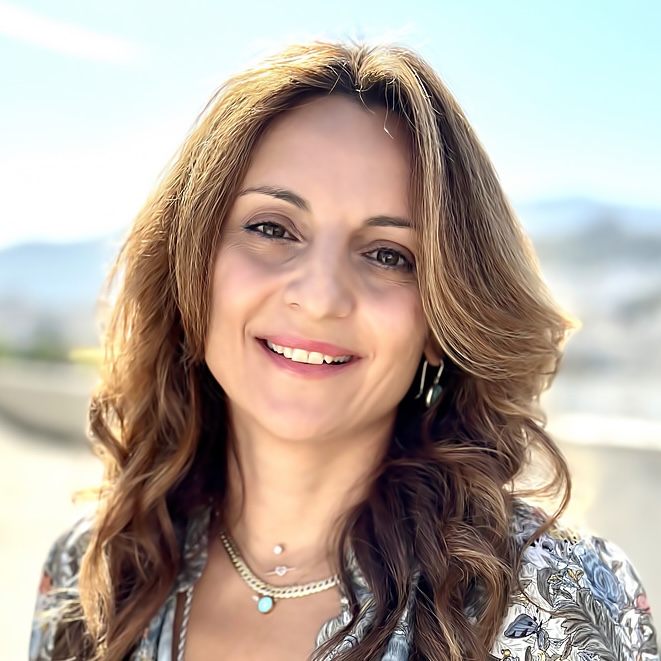
Professor Dr. Phoebe Koundouri
Date: 08:30-09:15, 20 May 2026
Title: Systems Transformations for Sustainability Transition: Impact Driven Science-based and Stakeholders-validated Pathways
Abstract:
The work, presented in this talk, advances a human-centered, interdisciplinary, and mathematically grounded systems framework for sustainable development, demonstrating how integrated modelling, beyond-GDP valuation, participatory co-design, and sustainable finance can translate the SDGs from ambition into implementation. It addresses interconnected global crises—climate change, biodiversity loss, inequality, fiscal stress, and governance failure—through spatially explicit, data-driven, and socially salient transformation pathways. By coupling AI-ready data infrastructure, integrated assessment models, and stakeholder engagement, the approach bridges science, policy, and markets, embedding climate, biodiversity, and social risks into financial and policy decision-making, and enabling equitable, scalable, and implementable pathways to 2030 and beyond.
Short bio:
Professor Dr. Phoebe Koundouri is a world-leading economist renowned for pioneering human-centred, interdisciplinary, mathematical systems for sustainable nature–society–economy interaction. She holds an MPhil/PhD (Univ. of Cambridge) and has held positions at the Univ. of Cambridge, UCL, LSE, Univ. of Reading, and Tehcnical University of Denmark (DTU). Currently, she is Professor at the Athens University of Economics and Business, Visiting Professor at the Dept. Earth Sciences Univ. of Cambridge and Founder and Director Alliance of Excellence for Research and Innovation in Aeforia AE4RIA (250 researchers). Ranked in the top 2% of scientists (e.g., Stanford list) with 20 books, 700 peered review publications, she has led more than 100 research and innovation projects in 120 countries. In 2025, she was invited by the UN General Secretary to Co-Chair the Global Sustainable Development Report (GSDR) 2027.
She serves on the Nominating Committee for the Nobel Prize in Economics. She is a Fellow of Academia Europaea, World Academy of Arts and Sciences (Trustee), European Academy of Sciences and Arts, Academy of Engineering & Technology of the Developing World, IAP, the European Association of Environmental and Resource Economists (EAERE), and European Forest Institute. She served as Commissioner for the Lancet COVID-19 Commission and member of the Fraternal Economy of Integral and Sustainable Development, Pontifical Academy of Social Sciences. Other major distinctions include the ERC Synergy Grant, the Academy of Athens Award of Science, the Award of the Academy of Sciences, Letters, and Arts of the Republic of Cyprus, named World Ambassador of Happiness and Peace (2022), a title conferred by the Government of India at the House of Lords in London.
She is the President European Association of Environmental and Resource Economists; President World Council of Environmental Resource Economists Association; Chair UN SDSN Global Climate Hub (2,000 universities); Co-chair UN SDSN Europe (900 universities); Selected editorial roles, editor Elements Book Series in Environmental and Resource Economics (Cambridge University Press); co-editor Environmental and Resource Economics (Official Journal of EAERE, Springer); associate editor Nature: Climate Action (Nature Portfolio). She is ERC Ambassador, EU Climate Pact Ambassador, member of the EIB Climate Leaders Network, and contributor to the IPCC. She advises the UN, G20, World Bank, EC, EIB, EBRD, OECD, WHO, and national governments.
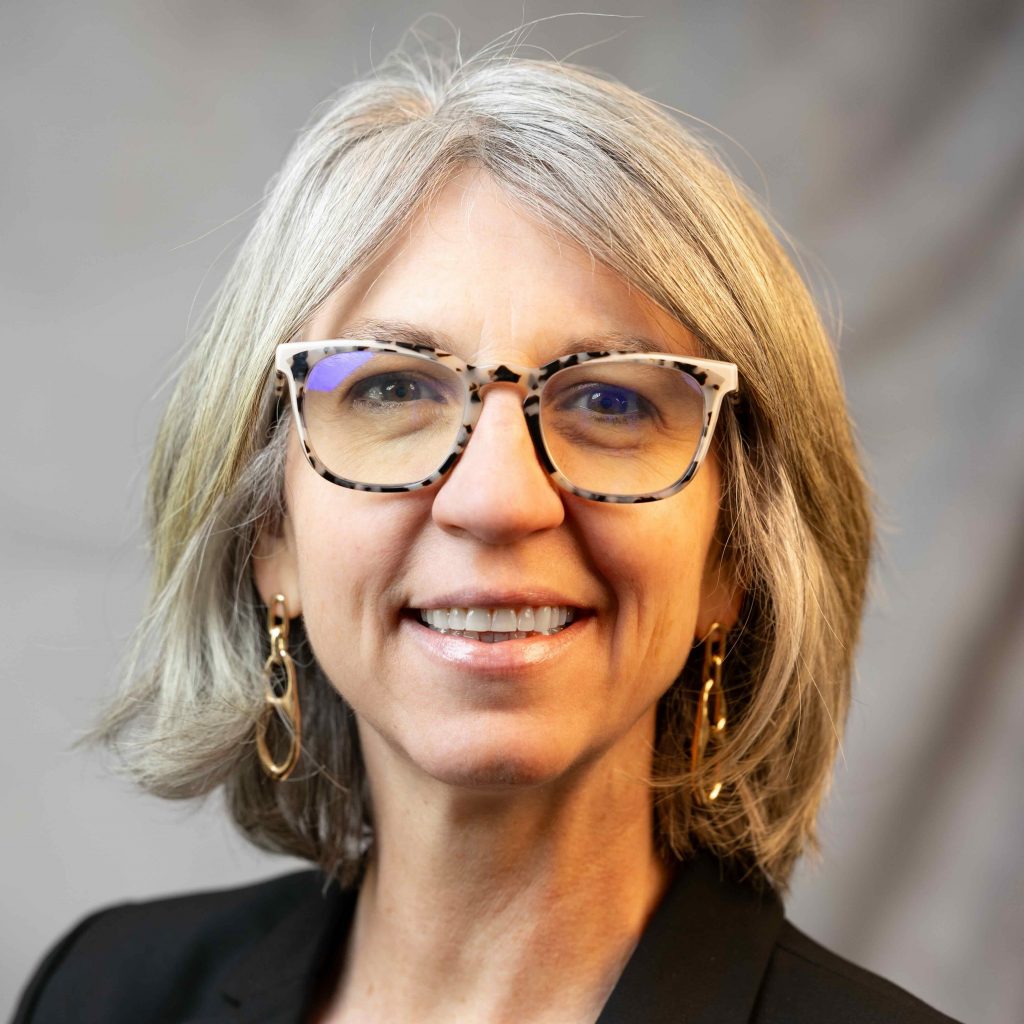
Prof. Emily Berglund
Date: 09:15-10:00, 20 May 2026
Title: Beyond the Pipe: A Sociotechnical Systems Perspective for Water Infrastructure Planning and Management
Abstract:
A sociotechnical systems perspective provides a comprehensive approach to understand and manage water infrastructure by moving beyond traditional mechanics to characterize the dynamic interactions between human actors and the built environment. As consumers respond to water quality, economic incentives, and shifting social norms, such as the adoption of water-efficient technologies or the transition to working from home, system demands evolve in complex, non-linear ways. This research presents an agent-based modeling approach to simulate water infrastructure, where agents represent individual households and residents. By coupling agent-based modeling with hydraulic simulation, water flows and quality are updated in response to autonomous human behaviors. This integrated approach represents feedbacks, behaviors, and consumer heterogeneity to capture unexpected changes in infrastructure performance, improve strategic decision-making, and assess equitable access to drinking water.
This presentation demonstrates the application of agent-based modeling to assess the performance of drinking water distribution systems across three dimensions. First, a contamination event is used to demonstrate how tight feedback loops between consumers and infrastructure reshape the emergent contaminant plume and inform management decisions. Second, a phased water reuse master plan is modeled by operationalizing the social amplification of risk framework to project adoption and plan infrastructure development. Finally, a COVID-19 scenario is used to assess how household-level heterogeneity affects decision-making around working from home, tap water avoidance, and water affordability. Collectively, these applications demonstrate the power of agent-based modeling to explore emergent outcomes in infrastructure performance and to plan systems that account for consumer adaptation. Ultimately, a sociotechnical perspective provides an important analytical approach to better understand the interactions among consumers, utility providers, and water systems in new and critical contexts, including emerging technologies, infrastructure transitions, and water scarcity.
Short Bio:
Dr. Emily Zechman Berglund is a Professor and Associate Head for Faculty Development in the Department of Civil, Construction, and Environmental Engineering at North Carolina State University. After earning her B.S. and M.S. at the University of Kentucky, she completed her Ph.D. at NC State in 2005. Dr. Berglund has since established her research program in the study of sociotechnical systems, specifically examining the feedback loops between human behavior, infrastructure, and environmental change. Her research integrates agent-based modeling, theories of behavioral change, mathematical optimization, and engineering analysis to enhance the resilience of water resources, infrastructure, and communities.
Dr. Berglund received NC State’s Outstanding Graduate Faculty Mentor Award in 2018 and the ASCE 2026 Margaret S. Petersen Award. Her work has earned multiple Editor’s Choice and Best Paper awards from the Journal of Water Resources Planning and Management, including the 2020 Best Seminal Paper Award. Her research program has been supported by the National Science Foundation (NSF), the U.S-Israel Binational Science Foundation, the Environmental Protection Agency (EPA), the National Security Agency (NSA), and various state water and transportation research institutes.
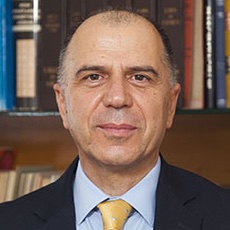
Mr. Socrates Metaxas
Date: 08:30-09:15, 21 May 2026
Title:
Short Bio
Socrates Metaxas graduated from Lanitio High School in 1982. After completing his military service, he attended the London School of Economics and Political Science, obtaining a degree in Economics in 1987 with a specialisation in Industry & Commerce. In 1988, he earned a Master’s degree in Business Administration (MBA) from City University Business School in London. Between 1988 and 1992, he worked at an audit firm in London, where he qualified as a Chartered Accountant. From 1993 until the end of June 2024, he served at the Water Board of Lemesos (WBL), initially as Head of Financial Services, and from 2007 as the WBL’s Manager. Following the local government reform, on 1 July 2024, he was appointed as Managing Director of the Limassol District Local Government Organisation (EOA Lemesos).